


Women in Dairy - Tanya Chicken
There’s good reason why the South African Food-based dietary guidelines recommend that dairy should be enjoyed every day as part of a balanced diet. From fresh milk and cheese to maas and yoghurt, dairy foods are an affordable source of high-quality protein, calcium and other essential nutrients that support health across every stage of life.
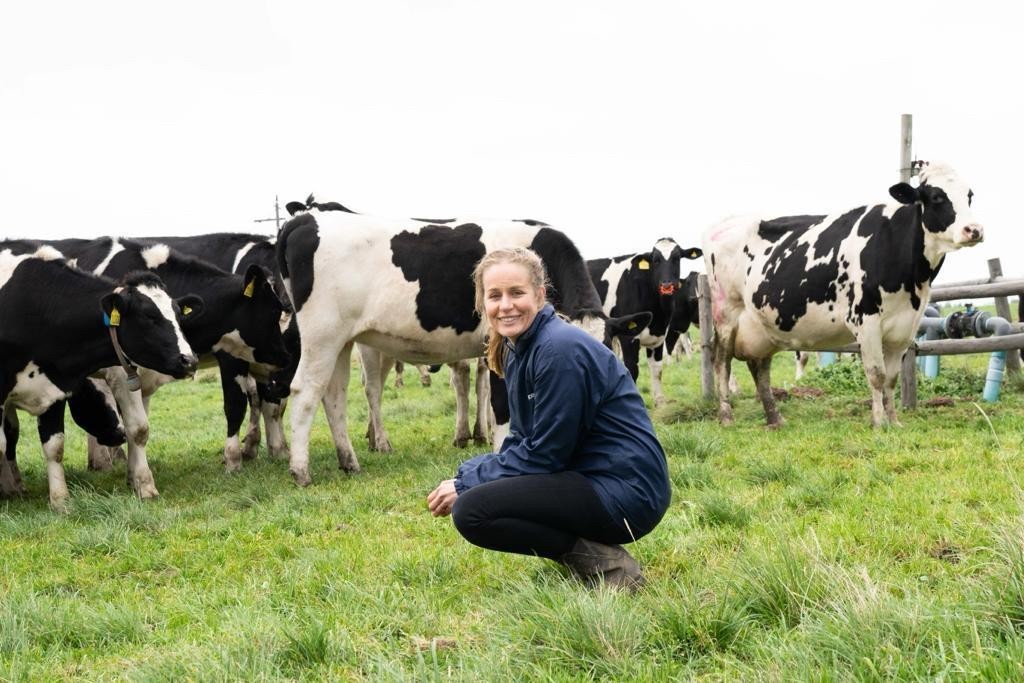
Behind these everyday dairy products are thousands of people working across South Africa’s dairy industry, from farmers and farm workers to transporters, processors and retailers. Among them is Tanya Chicken, who manages Robhoek Farm in the Tsitsikamma area, where dairy farming is built around animal care, sustainable farming practices and producing high-quality milk.
While dairy farming is often associated with traditional farming practices, Tanya says modern dairy operations increasingly combine animal husbandry with technology, data analysis, environmental management and business strategy.
Tanya took over primary responsibility for Robhoek Farm from her father five years ago and today her role spans everything from labour management and compliance to pasture planning, supplier relationships and implementing new farming technologies.
Pivoting from law to dairy farming
Tanya’s route into a career in dairy was not a conventional one. She studied law and worked as a corporate attorney in Cape Town before deciding to leave city life behind. She and her husband had always dreamed of raising their children closer to nature and animals. Around the same time as they were thinking of starting a family, Tanya’s father began planning succession on the family farm and approached them about returning to the Tsitsikamma.
“I hadn’t studied agriculture, so the transition required a lot of learning, with guidance from my dad, our management team, consultants and other farmers,” she explains. Her background in corporate law, however, helped shape the structured and analytical approach she now brings to managing a modern dairy operation. “It hasn’t always been easy, but being able to spend my days outdoors working with animals and living close to family in arguably one of the most beautiful parts of the world has made the change incredibly rewarding.”
Embracing technology in dairy farming
Working alongside her father has also shaped Tanya’s approach to farming and business.
“One of the most important lessons I’ve learned from my dad is to be willing to take risks, particularly when it comes to adopting technology in the dairy industry,” she says. “As a first-generation dairy farmer, he has always had to think outside the box to succeed in what can be a very tough industry.”
Today’s dairy industry increasingly relies on data and precision management, with technology playing an important role in improving efficiency, animal health and sustainability. Electronic monitoring systems, data analysis and improved herd management tools help farmers make more informed decisions in an industry where many factors remain outside their control.
“Dairy farming is influenced by everything from weather conditions and animal disease outbreaks to fluctuating milk prices and global events,” Tanya explains. “I’ve learned from my dad, the importance of being proactive, staying flexible and constantly adapting as circumstances change.” Top of FormBottom of Form
A modern dairy farm is a team effort
Tanya says many consumers would be surprised by how many people and moving parts are involved in producing milk on a modern dairy farm.
“They say it takes a village to raise a child – and the same is true for producing milk,” she says. “A dairy farm depends on many people working together – those raising calves, caring for the cows, milking them, managing pastures, maintaining equipment and keeping the dairy running smoothly.”
The farm operates around carefully managed routines, with the cows being milked twice a day, every day of the year. Producing milk consistently and safely requires constant attention to animal care, nutrition, pasture management, hygiene and infrastructure.
“There are countless details that need constant attention,” Tanya says. “These include producing and providing quality feed, ensuring fresh water, maintaining safe walkways, providing veterinary care and creating a calm, hygienic environment for milking.”
Why animal welfare is key
“Animal welfare is one of our non-negotiables at Robhoek – something we never compromise on,” she says. “A calm, healthy cow is naturally more resilient and productive, while stressed animals are far more likely to become sick or injured.”
The farm uses both traditional stockmanship and modern technology to care for the herd. Electronic monitoring collars help track eating, rumination and movement, while AI monitoring systems in the dairy assist with identifying health concerns early.
Why sustainability matters in dairy farming
Like many sectors within agriculture, dairy farming faces increasing pressure from rising costs, changing weather patterns and strain on natural resources.
“Some of the biggest challenges facing dairy farmers at the moment are rising input costs, the cost and availability of land, and increasing pressure from severe weather patterns and disease risks,” Tanya says.
She explains that sustainable farming practices are essential not only for protecting the environment, but also for ensuring the long-term viability of farming businesses. “Environmental sustainability is crucial for any industry that operates within and depends on the natural environment to succeed – and this is especially true for farming,” she says.
At Robhoek Farm, data and measurement play a major role in improving both efficiency and sustainability. “In Afrikaans we say ‘Om te meet is om te weet’ – to measure is to know,” Tanya says. “This philosophy has always guided how we run our farm.”
The farm closely monitors milk production, pasture growth, feed intake and soil health to guide grazing, fertiliser and crop management decisions. Robhoek is also installing solar power to increase its use of renewable energy. By combining data-driven decision-making with precision management, the farm aims to use resources more efficiently while continuously improving productivity and sustainability.
“If we look after our land, water and pastures properly today, we are protecting the future of the farm for the next generation,” Tanya says.
Women taking on broader roles in agriculture
Tanya says she has noticed a clear increase in the number of women working across the agricultural industry over the past decade.
“As a woman working in agriculture, I have definitely seen a shift away from what was once a heavily male-dominated environment,” she says.
Today, she regularly meets women working as farmers, agricultural consultants and service providers across the industry. “It’s encouraging to see more women entering agriculture and contributing their skills and perspectives in technical, consulting and management roles across the value chain,” she says.
The rewards of working with animals
For Tanya, some of the most meaningful moments in dairy farming are often the simplest.
“For me, it’s all about the cows,” she says. “Sometimes there’s a calf that needed extra attention as a baby, or one that was simply more curious about humans than the others. One of the most rewarding moments for me is walking into a herd of heifers or milk cows and having that particular animal come over to say hello and wait for a head scratch. Moments like that are a small reminder of the relationships we build with the animals we work with every day.”
She also hopes consumers better understand the many people involved in bringing dairy products from farm to table. “Many people would be surprised by how much work goes into getting every litre of milk from the cow to the consumer’s table,” she says. “Understanding this journey helps highlight the amount of care, coordination and expertise required to bring fresh dairy products to the table every day.”